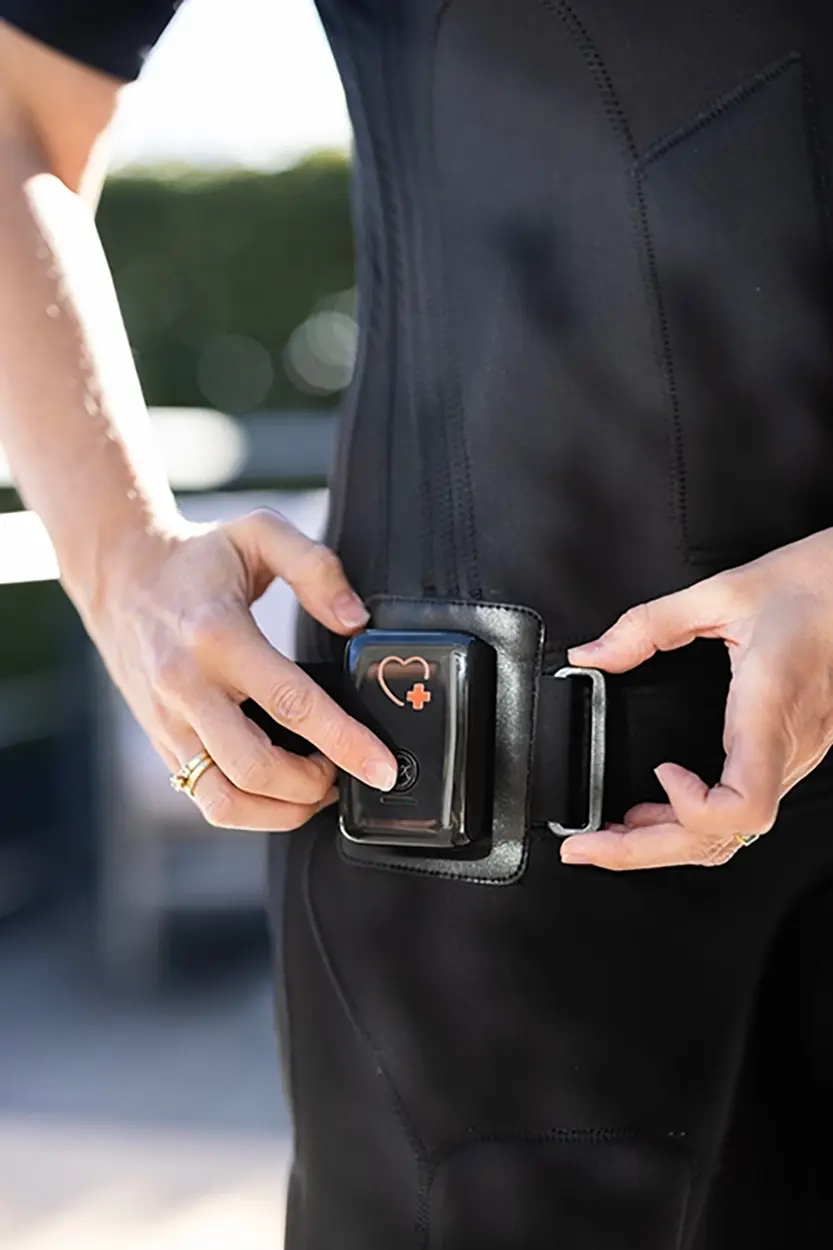
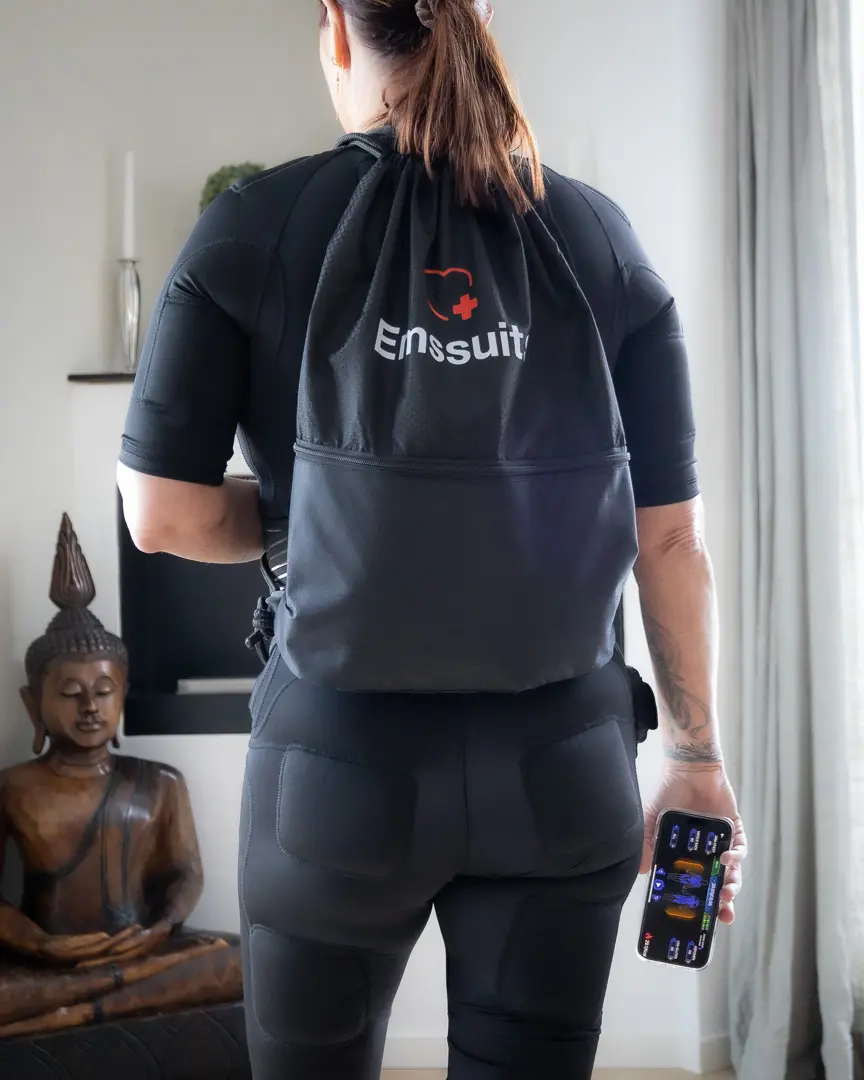
EMS has been used in physiotherapy and rehabilitation for many years to activate muscles in people with reduced mobility or after long periods of inactivity. Today, EMS is also used by recreational exercisers, but the technology still has a close connection to rehabilitation.
After an injury or surgery, the body can lose strength and muscle mass relatively quickly. In some cases, EMS can be a relevant supplement to conventional rehabilitation because muscles can be activated without the same loading as heavy strength training.
However, EMS is not a shortcut or a replacement for conventional physiotherapy. It is therefore important to understand when EMS makes sense and when you should be cautious.
What is EMS — and how does it work?
EMS stands for electrical muscle stimulation. During training, electrodes send electrical impulses to the muscles, causing them to contract — just as when the brain normally activates muscles through the nervous system.
EMS can activate several muscle groups simultaneously, and the exertion often feels gentler than traditional strength training with heavy weights.
This is also why EMS has been used as a supplement in physiotherapy and rehabilitation for many years.
Why is EMS used in rehabilitation?
When the body does not move normally for a period of time, muscles can quickly become weaker. This can happen after surgery, injuries or long periods of inactivity, for example.
EMS is often used here to:
-
activate muscles
-
maintain muscle mass
-
improve engagement of weakened muscles
-
support a gradual return to movement
One advantage of EMS is that muscles can work even when loading needs to remain relatively low.
When might EMS be useful after injury or surgery?
EMS may be relevant in situations where conventional strength training is difficult or needs to be reintroduced gradually.
These can include:
-
after surgery
-
muscle weakness
-
after long periods of inactivity
-
when gentle muscle activation is needed
-
reduced muscle engagement
This does not mean EMS should be used alone. In most cases, it works best as a supplement to conventional rehabilitation and movement.
What can EMS help with during rehabilitation?
EMS is primarily used for muscle activation and maintenance. Many people also find it easier to “find” their muscles again after a break or injury.
Typical areas of focus during rehabilitation can include:
-
better muscle engagement
-
increased stability
-
gentle strength stimulation
-
maintaining muscle mass
-
a gradual return to activity
For some people, EMS can also make getting started again easier because sessions are short and can be tailored individually.
When is EMS safe?
During rehabilitation, EMS should always be used thoughtfully. Particularly after surgery or major injuries, it is important to have your readiness assessed.
As a general rule, you should:
-
start at a low intensity
-
increase loading gradually
-
prioritise recovery
-
follow guidance from qualified professionals
EMS should not be used as a stand-alone solution immediately after surgery without approval from a doctor or physiotherapist.
When should you avoid EMS?
EMS is typically not recommended if you have:
-
a pacemaker
-
a pregnancy
-
epilepsy
-
a serious heart condition
-
a fever or infection
-
open wounds or complications after surgery
If you are unsure, always speak to a healthcare professional first.
EMS vs conventional rehabilitation
EMS can be a useful supplement, but it does not replace conventional rehabilitation.
Traditional rehabilitation also works on:
-
balance
-
mobility
-
coordination
-
movement patterns
EMS primarily focuses on muscle activation. It therefore often works best alongside conventional movement and physiotherapy rather than instead of them.
Can you use EMS at home during rehabilitation?
Yes, home EMS may be relevant for some people — particularly if you want short, controlled sessions at your own pace.
When training at home, it is especially important to:
-
start gently
-
use a moderate intensity
-
follow instructions
-
listen to your body
If EMS is used as part of rehabilitation, it should ideally be done in collaboration with a qualified professional.
When might EMS be useful?
| Situation | Might EMS be useful? |
|---|---|
| Muscle loss after a break | Yes, often as a supplement |
| Reduced muscle engagement | Yes |
| Rehabilitation after surgery | Yes, following a professional assessment |
| Limited tolerance for loading | Yes |
| Acute pain or complications | Requires assessment |
What does research say about EMS and rehabilitation?
EMS is well documented for muscle activation and has been used in physiotherapy for many years. Research suggests that EMS can be useful for maintaining or activating muscles — particularly in people with limited activity.
However, this does not mean EMS is a miracle tool. Results still depend on:
-
correct use
-
consistency
-
recovery
-
combining it with conventional movement
Frequently asked questions
Can EMS be used after surgery?
Yes, in some cases. However, this should always follow an assessment by a doctor or physiotherapist.
When can you start EMS after an injury?
That depends on the injury and the healing process. Your body needs to be ready for loading before EMS is actively used.
Is EMS safe during rehabilitation?
For many people, EMS is safe when used correctly at a moderate intensity. It is important to start gently and follow professional guidance.
Can EMS replace physiotherapy?
No. EMS works best as a supplement to conventional rehabilitation and movement.
How often should you use EMS during rehabilitation?
For most people, 1-2 times a week is a good starting point, depending on the situation and loading.
Can EMS help with muscle loss?
EMS is often used to activate and maintain muscles during reduced activity or after longer breaks.