
Back pain is something many people experience in everyday life. For some, it is tension after hours at a computer. For others, it stems from a weak core, repetitive movements, a lack of exercise or previous injuries.
EMS training is often mentioned as a gentle supplement because it can activate muscles without heavy weights. But can EMS help with back pain — and what can you realistically expect?
Here we explore how EMS can be used for back problems, sedentary work and the need for greater strength around the core and back.
Why do so many people experience back pain in everyday life?
Back pain often arises not from a single movement but from everyday habits over time. Sedentary work, long days in front of a screen and too little movement can leave the body stiff and less active.
When the core, hips and back muscles are not used enough, the body can lose some of the stability that helps support the back in daily life.
Typical causes can include:
- spending many hours sitting
- a lack of movement
- weak core and back muscles
- repetitive working postures
- tension and stress
The solution is therefore rarely just one thing. Often, the most sensible approach combines more movement, better habits and appropriate strength training.
What is EMS training?
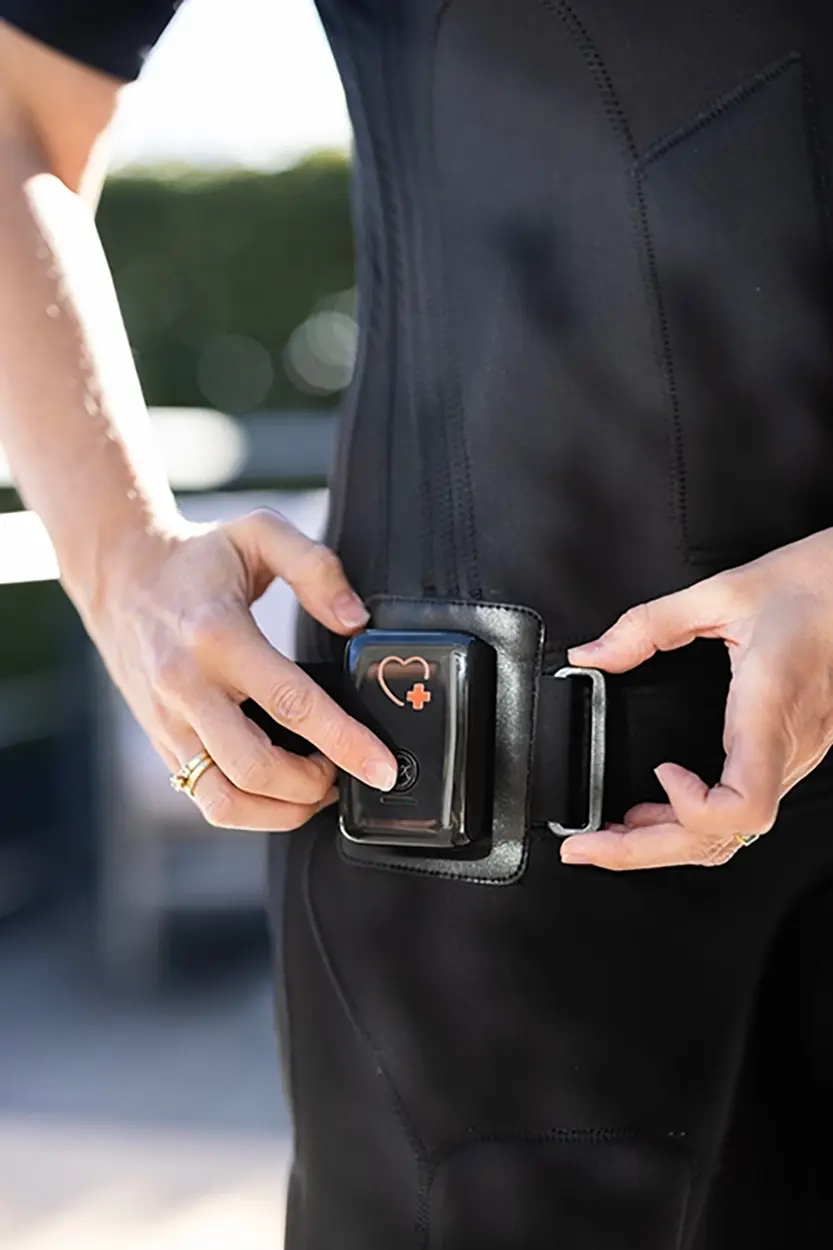
EMS stands for electrical muscle stimulation. During EMS training, electrodes send electrical impulses to the muscles, causing them to contract.
This resembles the way the body normally activates muscles through the nervous system. The difference is that the impulses come from an external source via an EMS suit.
EMS training is often combined with simple exercises such as squats, planks, stability exercises and gentle movements. This makes it possible to activate several muscle groups simultaneously in a relatively short time.
Can EMS help with back pain?
EMS cannot guarantee that back pain will disappear. Back pain can have many causes, and persistent or severe pain should always be assessed by a qualified professional.
However, EMS may be relevant as a supplement because it can help activate muscles around the core, back, hips and buttocks. These areas often play an important role in stability and body control.
Many people find EMS makes it easier to engage muscles that can normally be difficult to activate. This may be particularly relevant if you have a sedentary lifestyle or feel weak around your midsection.
EMS and sedentary work
Sedentary work is one of the most common causes of back stiffness and discomfort. When the body stays seated in the same position for hours, some muscles become overactive and tense while others become inactive.
EMS can be a practical supplement to more movement here. A short EMS session can help activate muscles that often do not get enough use during a working day.
This applies particularly to the:
- core
- back
- hips
- buttocks
However, EMS should not be the only solution. Breaks from sitting, walks, mobility work and general movement remain important.
Which muscle groups are important for back pain?
Back pain often involves more than just the back itself. Several muscle groups work together to stabilise the body.
| Muscle group | Why it matters |
|---|---|
| Core | Supports the body and helps with stability |
| Lower back | Contributes to posture and control |
| Hips and buttocks | Help with movement and relieve strain on the back |
| Abdominal muscles | Support body control and stabilisation |
As these areas become stronger and more active, the body can often function with greater stability in everyday life.
What does research say about EMS and the back?
EMS has been used in physiotherapy and rehabilitation for muscle activation for many years. Research generally suggests that EMS can be useful for activating and maintaining muscles.
However, this does not mean EMS is a proven cure for back pain. Back problems can have many different causes, so EMS should be viewed as a supplement — not a treatment in its own right.
For many people, EMS makes the most sense alongside general movement, strength training and good everyday habits.
When should you be cautious?
If you have acute or severe back pain, you should not simply start EMS training on your own. The same applies if pain radiates down your legs, you have altered sensation or you have previously had back surgery.
You should be particularly cautious with:
- acute back pain
- chronic back problems
- pain that worsens during exercise
- nerve symptoms
- previous back surgery
- pain with an unknown cause
In these cases, EMS should only be used following a professional assessment.
Can EMS replace conventional exercise?
EMS cannot replace all conventional exercise. Your back still needs movement, mobility, strength and variety.
However, EMS can be a useful supplement, particularly if you find it difficult to get started with traditional strength training or want a gentler way to activate your muscles.
For most people, the best solution will be a combination of:
- EMS training
- walking
- mobility work
- light strength training
- breaks from sedentary work
Can you use EMS at home for back pain?
Yes, many people use EMS at home as part of their training. However, if you have back pain, it is important to start gently and use a low to moderate intensity.
The focus should be on control and comfort — not turning the intensity up as high as possible. If training makes the pain worse, stop and seek a professional assessment.
Short sessions can be beneficial because they are easier to fit into everyday life and do not require heavy loads.
Who might benefit from EMS for back problems?
EMS may be relevant for people who want greater muscle activation and strength around the core and back.
This applies particularly to:
- people with sedentary jobs
- beginners
- people with a weak core
- people looking for gentle exercise
- people who find heavy strength training difficult
However, EMS should always be used with realistic expectations. It is a supplement to movement and strength training — not a quick fix for every back problem.
Frequently asked questions
Can EMS help with back pain?
EMS can help with muscle activation and stability, but it does not guarantee that back pain will disappear. If pain persists, seek a professional assessment.
Is EMS useful for sedentary work?
EMS can be a relevant supplement because it activates muscles that often become inactive during long hours of seated work.
Which back muscles does EMS train?
EMS can activate muscles around the back, core, hips and buttocks, depending on positioning and programme.
Can EMS replace physiotherapy?
No. EMS can supplement exercise and rehabilitation, but should not replace physiotherapy for pain or injuries.
Is EMS safe for chronic back pain?
That depends on the cause of the pain. For chronic back pain, EMS should be used following a professional assessment.
How often should you use EMS for back problems?
For many people, 1-2 times a week will be appropriate, but this depends on pain, fitness level and recovery.