
EMS training is a form of exercise that has attracted considerable attention in recent years – in the fitness world, on social media and in discussions about health. Some call it the future of training, while others are sceptical about promises of rapid results.
But what exactly is EMS, how does it work in practice, and what can you realistically expect?

What does EMS stand for?
EMS stands for Electrical Muscle Stimulation. It is a method of activating muscles using electrical impulses sent through electrodes placed on the body.
Normally, muscles contract when the brain sends signals through the nervous system. EMS mimics this process – but the impulses come from outside the body via a suit with built-in electrodes. This means muscles can be activated effectively without the resistance necessarily coming from heavy weights.
The technology has its roots in physiotherapy, where EMS has been used for many years for rehabilitation and to counteract muscle wasting. Today, EMS is also used as a standalone form of training – both in centres and at home.
What does EMS training involve in practice?
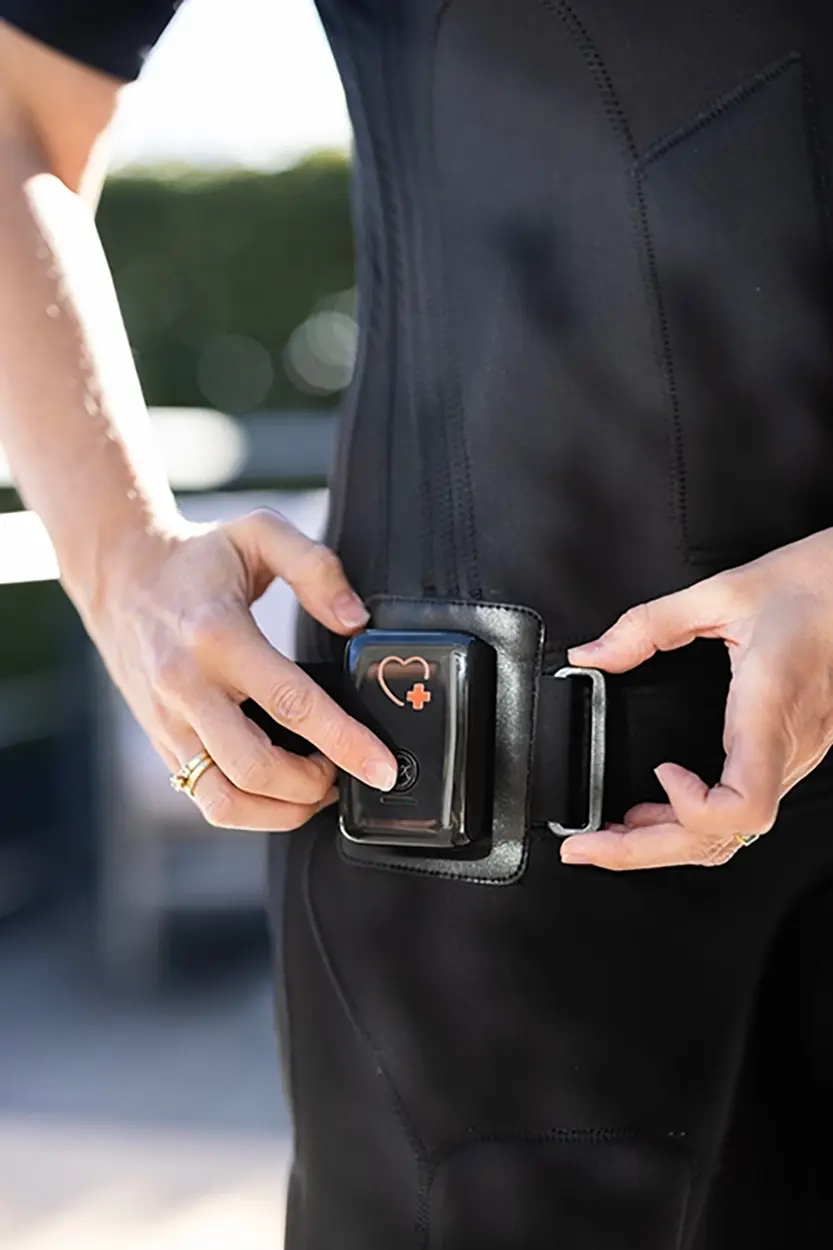
EMS training uses a specially designed suit with electrodes positioned over the body's major muscle groups. The impulses are controlled by an EMS device and adjusted individually, allowing the intensity to be tailored to your level, goals and experience.
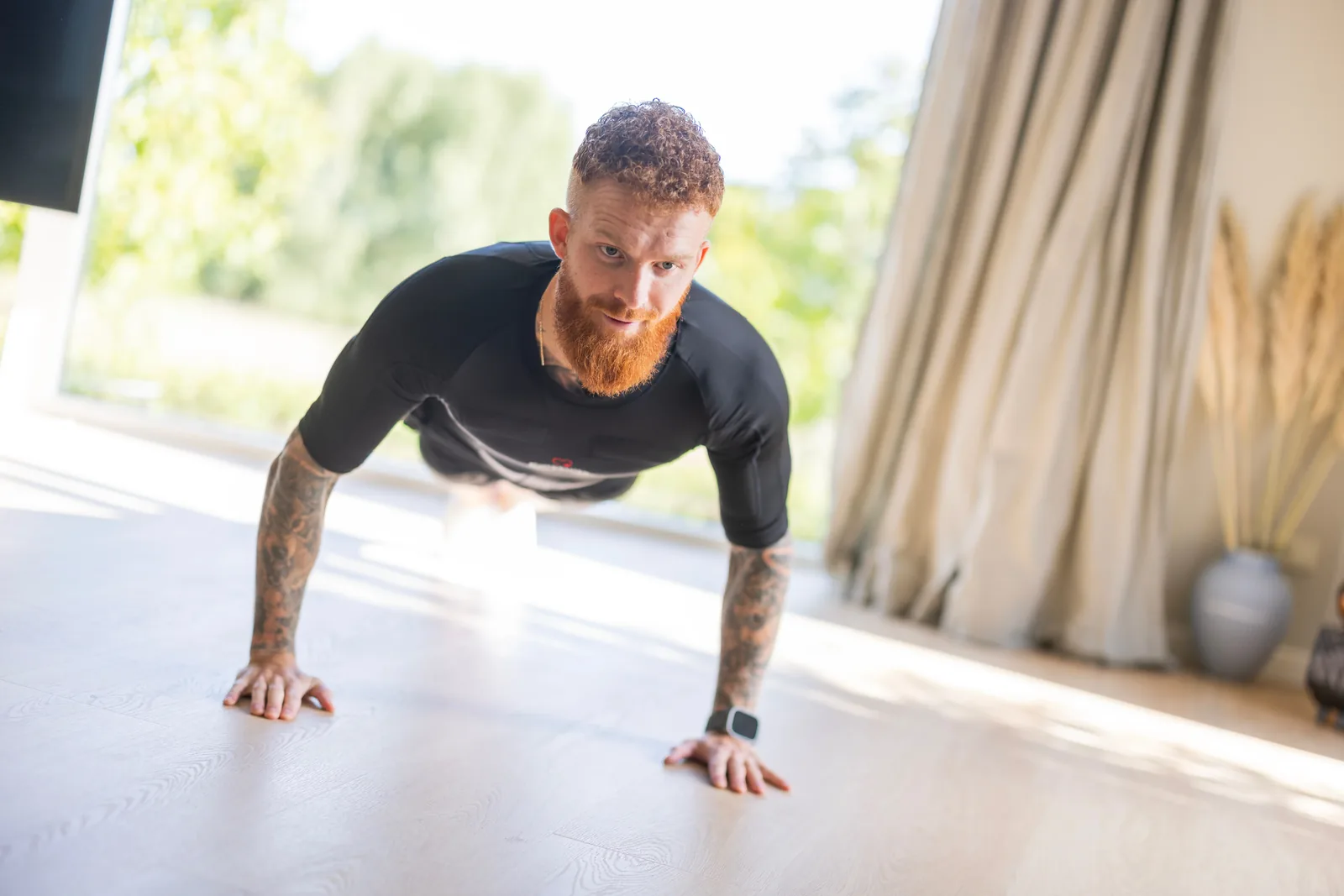
Training typically combines the impulses with simple exercises such as squats, lunges, planks and stability exercises. A session often lasts around 20 minutes, but many people find it surprisingly intense because several muscle groups are working at once.
Which muscle groups are activated?
One major difference from conventional strength training is that EMS often activates many muscle groups at the same time. Typically, it stimulates:
- Legs and thighs (front and back)
- Glutes
- Abdominals and core
- Back
- Chest
- Shoulders
- Arms
Because the impulses reach the muscles directly via the electrodes, it is harder to “cheat” or compensate, as can sometimes happen during traditional training. This can also make it easier to engage muscle groups that are otherwise difficult to activate consciously.
Does EMS training work?
The short answer is: yes – but with important qualifications.
EMS can activate muscles effectively and is used with good results for purposes including:
- muscle activation
- maintenance of muscle mass
- rehabilitation
- improved muscle engagement
Many people experience rapid improvements in strength and muscle tone – especially if they have not previously trained regularly with weights. EMS can therefore feel notably effective for untrained or lightly trained individuals.
However, research is inconclusive on whether EMS produces greater muscle growth than conventional strength training in people who are already trained. Results depend heavily on your starting point, training frequency, recovery, sleep and lifestyle.
EMS vs traditional strength training
EMS and conventional strength training each have their strengths.
EMS training can be particularly useful for:
- short workouts
- low joint loading
- high muscle activation
- rehabilitation and maintenance
Traditional strength training typically excels at:
- maximum strength and progression through resistance
- coordination and movement patterns
- a wide variety of exercises
- more thoroughly documented effects on muscle growth
For many people, it makes most sense to view EMS as a supplement – not necessarily a replacement for all other exercise.
Swipe sideways to see the full table on mobile →
| Parameter | EMS training | Traditional strength training |
|---|---|---|
| Training time per session | Approx. 20 minutes | 45–90 minutes |
| Joint loading | Low | Moderate to high |
| Muscle activation | Many muscle groups simultaneously | Often one primary muscle group at a time |
| Coordination and technique | Limited movement training | Extensive movement training |
| Muscle growth (evidence) | Effective – especially for untrained people | Most thoroughly documented |
| Suitable for rehabilitation | Yes | Depends on the type of injury |
| Requires heavy weights | No | Yes, often |
Benefits of EMS training
EMS is popular for several reasons:
- time-saving (often approx. 20 minutes per session)
- gentle on joints and tendons
- can be tailored to the individual
- suitable for rehabilitation
- motivating for people who would otherwise not exercise
- activates many muscle groups simultaneously
Particularly if you have a busy life or physical limitations, EMS can be a realistic way to keep your body active.
How often should you train with EMS?
Most recommendations suggest around 2 times a week. EMS can be intensive for the muscles, and recovery plays a major role. More is not automatically better – your body needs breaks to rebuild.
Can EMS be used on its own, or should it be combined with other exercise?
EMS can certainly be used on its own if the alternative is no exercise. But for most people, it makes most sense to combine EMS with:
- regular daily movement
- cardiovascular exercise
- light strength training or functional training
This provides a better balance of strength, cardiovascular fitness, mobility and body control.
Who is EMS training suitable for?
EMS can be adapted to many people and is often well suited to:
- people with busy lives who want to train effectively in a short time
- beginners who want a manageable introduction to strength training
- people undergoing rehabilitation who need muscle activation without high joint loading
- older people who want to maintain strength and stability
- those who prefer a gentler form of exercise without heavy weights
Who should not use EMS training?
Swipe sideways to see the full table on mobile →
| Suitable for | Should avoid / requires medical assessment |
|---|---|
| Busy people | Pregnant women |
| Beginners | People with pacemakers |
| People undergoing rehabilitation | Serious heart conditions |
| Older people | Epilepsy |
| People with joint problems | Acute infection or fever |
EMS is generally not recommended during pregnancy or for people with a pacemaker. People with serious heart conditions, epilepsy or other serious health conditions should only use EMS training following a medical assessment.
If you have a fever or infection, postpone training until your body is fully ready again. In general, it is important to disclose any relevant health conditions and follow recommendations for getting started safely.
Frequently asked questions
EMS stands for Electrical Muscle Stimulation. It is a method of activating muscles using electrical impulses sent through electrodes placed on the body. The impulses cause the muscles to contract in the same way as when the brain sends signals through the nervous system.
During EMS training, you wear a suit with built-in electrodes. A device sends controlled electrical impulses to the body's major muscle groups while you perform simple exercises such as squats, lunges or planks. The impulses intensify muscular activity and activate several muscle groups simultaneously.
What is the difference between EMS training and regular strength training?
The main difference is how the muscles are activated. In regular strength training, resistance comes from weights or body weight, whereas EMS training stimulates the muscles externally through electrical impulses. EMS can activate many muscle groups simultaneously, but it does not train coordination and movement patterns in the same way as traditional strength training.
For healthy people who follow recommendations on intensity and recovery, EMS training is generally considered safe. However, it should be avoided during pregnancy, with a pacemaker, serious heart conditions or epilepsy, and during an acute infection or fever. If in doubt, consult a doctor.
Can EMS training be your only exercise?
EMS training can be used on its own if the alternative is no exercise. For most people, however, it makes most sense to combine EMS with regular movement or another form of exercise to achieve balanced physical development.